
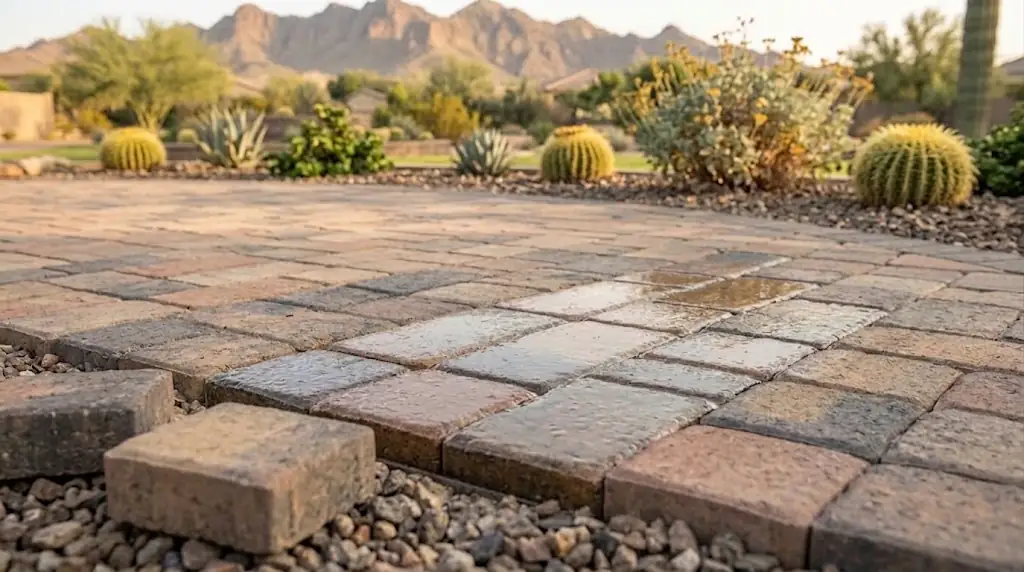
Sealing is one of the most overlooked steps in keeping a paver surface looking good long-term, and it matters more here than in most parts of the country. Between intense UV exposure nearly year-round and the sudden heavy rain of monsoon season, unsealed pavers in Gilbert, AZ fade, stain, and lose their joint sand faster than in milder climates. Gilbert Pavers provides professional paver sealing for patios, driveways, walkways, and pool decks throughout the Gilbert area, using sealants specifically chosen for desert conditions.
Whether your pavers are newly installed and ready for their first seal, or you have an older surface that’s faded, stained, or losing joint sand, we assess the current condition of your pavers and recommend the right sealant type and finish for how that particular surface is used.
Why Sealing Matters More in the Desert
Unsealed pavers are porous, which means they absorb whatever comes into contact with them — oil from a car, chlorine and pool chemicals, rust from patio furniture, and general dirt and grime. Once a stain sets into an unsealed paver, it’s often permanent, because the porous surface has nowhere for the discoloration to go.
UV exposure is the other major factor. Gilbert, AZ gets an enormous amount of direct sun exposure across the year, and unsealed paver color fades noticeably faster than sealed surfaces, particularly on driveways and pool decks that don’t get much shade. A quality sealant includes UV inhibitors that slow this fading process significantly, keeping the color closer to how it looked on installation day.
Sealing also plays a direct role in joint stability. A sealed surface helps lock polymeric sand in place against monsoon rain and everyday water exposure, which means less weed growth, less ant intrusion, and less need for joint sand touch-ups over time.
What Sealing Actually Protects Against
UV fading — A quality sealant with UV inhibitors slows color fade substantially compared to unsealed pavers exposed to direct desert sun.
Staining — Sealed pavers resist absorption of oil, rust, chlorine, and everyday dirt, making spills and stains far easier to clean before they set in permanently.
Weed and ant intrusion — Sealing helps stabilize joint sand, closing off the gaps that weeds and desert ants use to establish themselves between pavers.
Efflorescence — That chalky white residue that sometimes appears on pavers is caused by minerals leaching out through the material, and sealing helps reduce its appearance over time.
Water damage and erosion — A sealed surface sheds water more effectively during monsoon storms rather than absorbing it, which protects both the pavers and the joint sand underneath.
Our Sealing Process
Surface cleaning — Before any sealant goes down, we thoroughly clean the surface to remove dirt, efflorescence, and any existing residue, since sealing over a dirty surface traps the grime underneath and produces an uneven finish.
Repairing joint sand — Any degraded or missing polymeric sand is refreshed before sealing, since sealant applied over damaged joints won’t hold as well or look as clean.
Sealant selection — We choose between different sealant finishes, including natural low-sheen looks and wet-look, higher-gloss finishes, based on your preference and how the surface is used.
Application — Sealant is applied evenly across the surface and allowed to cure fully before the area is used again, ensuring consistent coverage without streaking or pooling.
How Often Pavers Should Be Resealed
Given the sun exposure across most of the year, sealant on Gilbert pavers tends to wear down faster than in milder climates, and most surfaces benefit from resealing every few years depending on sun exposure, foot traffic, and pool chemical contact. Pool decks and driveways generally need more frequent attention than shaded walkways or covered patio areas. We’ll give you a straightforward recommendation based on the specific surface and its exposure rather than a generic timeline that doesn’t account for your actual conditions.
Sealing New vs. Existing Pavers
Newly installed pavers typically need a short curing period before sealing, since sealing too early can trap moisture and cause a hazy appearance. For existing, unsealed pavers that have been down for a while, we do a more thorough cleaning process first to strip away accumulated grime and any prior sealant buildup before applying a fresh coat, so the sealant bonds properly and the finish comes out even.
Protect Your Investment
Sealing is a relatively small cost compared to the price of a full paver installation, and it’s one of the more effective ways to extend the life and appearance of that investment in a climate that’s genuinely hard on outdoor surfaces. A properly sealed patio, driveway, or pool deck holds its color, resists staining, and requires less joint maintenance for years longer than an unsealed one.
Schedule Paver Sealing
If your pavers are fading, staining easily, or losing joint sand, or if you have a new installation ready for its first seal, Gilbert Pavers can assess the surface and recommend the right sealing approach for your property. Reach out through our contact page to schedule service for your Gilbert paver surfaces.