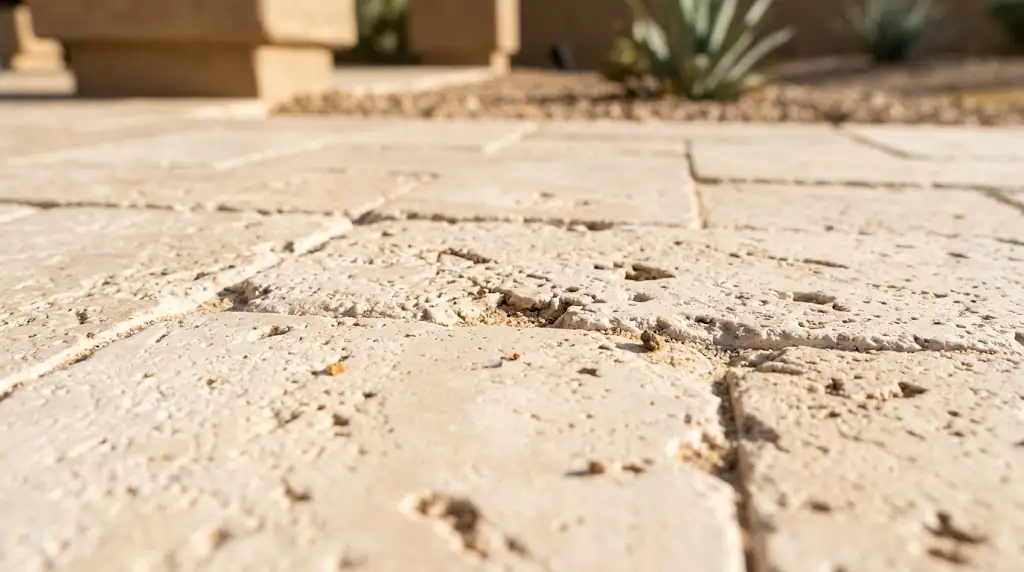
Light-colored natural travertine and light-toned, textured porcelain pavers stay the coolest underfoot in the Phoenix East Valley summer heat, remaining up to 20°F to 30°F cooler than standard dark concrete or red brick. Their light hues provide high solar reflectance, while travertine’s natural cellular porosity prevents solar heat from transferring rapidly into bare skin.
Thermal Performance Breakdown by Paver Material
Direct solar radiation in Maricopa County easily pushes dense, dark hardscape surfaces past 150°F during peak summer afternoons. Pavement thermal safety depends directly on Solar Reflectance (albedo)—the ability to bounce sunlight back rather than absorbing it—and thermal conductivity.
| Paver Material | Average Solar Reflectance Index (SRI) | Typical Surface Temp at 110°F Ambient | Barefoot Tolerability (Midday) | Best Regional Use Case |
| Ivory / White Travertine | 60 – 75 | 118°F – 128°F | Excellent (Walkable) | Pool coping, open patios, ramadas |
| White / Cream Limestone | 55 – 70 | 120°F – 130°F | Excellent (Walkable) | Shaded courtyards, luxury pool decks |
| Light Textured Porcelain | 50 – 65 | 122°F – 132°F | Very Good (Brief Contact) | Modern patios, outdoor kitchens |
| Light Gray / Tan Concrete | 35 – 50 | 135°F – 148°F | Moderate (Quick Steps) | Patios, walkways, driveways |
| Dark Red Brick | 20 – 30 | 150°F – 162°F | Severe Burn Risk | Shaded gardens, accent bands |
| Charcoal / Basalt Pavers | 5 – 15 | 165°F – 180°F+ | Extreme Burn Risk | Strictly architectural borders |
Why Travertine Dominates East Valley Backyards
Travertine is a sedimentary stone formed by mineral precipitation around natural geothermal hot springs. This geological process creates a network of subterranean cavities and pockets throughout the stone.
- Air Pocket Thermal Insulation: The tiny cavities in unhoned or tumbled travertine interrupt thermal conductivity. The surface does not transmit heat into human skin at the same rate as dense, solid concrete.
- Low Metallic Mineral Content: Travertine lacks high concentrations of dense iron or quartz minerals that absorb and store daytime thermal mass.
- High Evaporative Cooling: Around swimming pools, travertine absorbs surface splash-out into its microscopic voids, dissipating heat through surface evaporation during dry desert heat waves.
- Tumbled Surface Safety: Tumbled travertine delivers high traction without artificial sealers that trap heat or cause surface slickness.
For verified temperature records and heat duration figures across regional municipalities like Mesa, Chandler, and Gilbert, consult the National Weather Service Phoenix Climate Data.
How Paver Color Dictates Solar Retention
Material composition matters, but surface coloration governs up to 70% of total heat absorption. The Sonoran Desert receives over 300 days of direct sunshine annually, accelerating heat storage on dark aggregate.
- High-Albedo Colors (Best): Ivory, cream, pale beige, shell, and soft silver reflect solar radiation away from your outdoor living areas.
- Medium-Albedo Colors (Moderate): Terracotta, desert sand, buckskin, and mocha absorb moderate energy and become uncomfortable to bare skin between 1:00 PM and 5:00 PM.
- Low-Albedo Colors (Avoid in Open Sun): Charcoal, slate, deep chocolate, and red clay trap solar energy continuously, elevating surrounding ambient temperatures via localized heat island effects.
The Cool Roof Rating Council (CRRC) Pavements Guide details how high-SRI surfaces systematically reduce localized surface temperatures across desert environments.
Material Comparison for East Valley Outdoor Living
1. Concrete Interlocking Pavers
Concrete pavers are durable, vehicular-rated, and budget-friendly. However, concrete possesses high thermal mass. Once concrete pavers absorb heat, they hold that heat well into the evening hours.
- East Valley Rule: If you choose concrete for a pool deck or barefoot walkway in Queen Creek or Gilbert, select light pastel blends (such as cream or light linen) and pair the area with pergolas or shade sails.
2. Exterior-Grade Porcelain Pavers
Porcelain pavers are non-porous and baked at temperatures exceeding 2,200°F during production. They do not absorb pool chemicals, desert irrigation salts, or grilling grease.
- Thermal Reality: Light-toned porcelain sheds heat rapidly once direct sunlight passes. However, because porcelain is dense and non-porous, its surface heats up faster under direct mid-day overhead sun compared to travertine. Opt for structured, matte finishes rather than smooth surfaces.
3. Natural Limestone and Sandstone
Light cream limestone behaves similarly to travertine. Certain sandstones, however, contain high iron oxide deposits that trap heat. Sandstone is also prone to mineral flaking when exposed to continuous hard water splashes from municipal water supplies in Scottsdale and Mesa.
Local Microclimates and Hardscape Siting
Building layout and exposure dictate how cool a patio stays during East Valley summer months:
- South- and West-Facing Yards: Backyards in Gilbert and Chandler with unobstructed western exposures receive intense, low-angle afternoon UV rays. In these zones, light travertine is mandatory if barefoot pedestrian traffic is required.
- North-Facing Courtyards: Patio zones that receive shade from the main house structure stay 15°F to 25°F cooler throughout the day. You can safely install standard tan or textured concrete pavers in these shaded microclimates without risking uncomfortable surface temperatures.
- Paradise Valley & Scottsdale Setback Restrictions: Many hillside and desert-estate communities enforce strict light-reflectance value (LRV) caps to avoid daytime glare blinding neighboring properties. Selecting bone-white pavers can trigger HOA design review rejections. Off-white travertine (such as Walnut Light or Antique Blend) meets HOA glare limits while maintaining lower surface temperatures.
3 Rules for Designing a Barefoot-Safe Patio
- Verify Stone Lot Samples in Midday Sun: Never evaluate paver color under indoor showroom lighting. Take physical samples to your job site, leave them in direct sun for two hours at 2:00 PM, and test them with bare skin.
- Avoid High-Gloss Acrylic Sealers: High-gloss “wet look” acrylic sealers form an impermeable plastic barrier over natural stone pores. This film traps surface heat and turns slick when wet. Use penetrating, breathable, zero-sheen silane-siloxane impregnating sealers that preserve the stone’s evaporative capability.
- Incorporate Shade Lines and Turf Transitions: Break up wide hardscape expanses with integrated ramadas, cantilevered umbrellas, or synthetic turf runs. A shaded path or turf border allows homeowners and pets to cross high-sun zones safely without burning footpads.
To review cool-surface material samples or calculate installation specs tailored to your home’s orientation, contact Gilbert Pavers through the contact page.